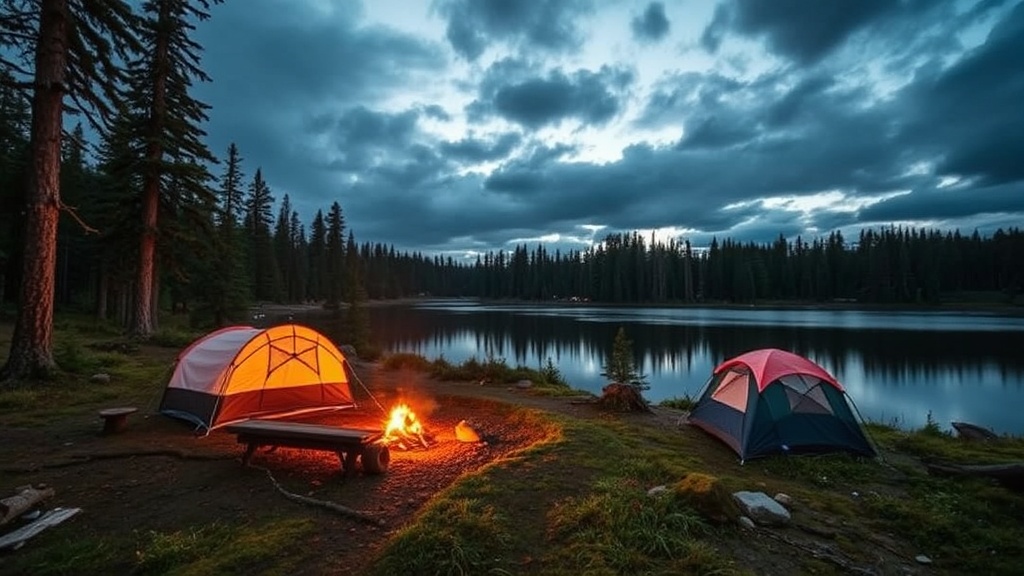
Hidden Gem Campgrounds in the Pacific Northwest You Need to Visit

Why the Pacific Northwest's Hidden Campgrounds Deserve Your Attention
This post identifies eight lesser-known campgrounds across Washington, Oregon, and Idaho that deliver exceptional camping experiences without the crowds found at popular destinations like Crater Lake or Olympic National Park. The Pacific Northwest contains over 24 million acres of public land managed by the Forest Service and BLM, yet most campers cluster at the same 50-100 well-documented sites. By targeting under-the-radar locations—many with no reservation systems, minimal fees, and direct access to hiking trails, hot springs, and old-growth forest—you'll spend less time competing for spots and more time experiencing what makes this region worth camping in.
Criteria for Selection
Each campground below meets specific standards: fewer than 30 total sites, limited or no cell service, located at least 20 miles from the nearest town with over 5,000 residents, and verified operational status as of 2024. Elevation, seasonal accessibility, and current fee structures are included so you can plan accurately.
Washington: The Olympic Peninsula's Overlooked Valleys
Falls Creek Campground
Located 28 miles southwest of Forks on Forest Service Road 2918, Falls Creek Campground sits at 1,200 feet elevation along the South Fork Hoh River. This 12-site campground operates on a first-come, first-served basis with a $10 nightly fee (cash or check only, no reservations). The sites accommodate vehicles up to 25 feet; no hookups available.
What distinguishes Falls Creek is proximity to the South Fork Hoh Trail, which accesses the Wonder Mountain Wilderness. The trail climbs 3,200 feet over 8.4 miles to Anderson Pass, passing through 400-year-old western red cedar stands. Peak season runs June 15 through October 15; snow typically blocks road access until mid-June. No potable water—bring filtration for river water or pack in your own supply. The campground fills on approximately 40% of summer weekends, based on Forest Service occupancy data from 2023.
Graves Creek Campground
Twenty-two miles north of Aberdeen via Highway 101 and Forest Road 22, Graves Creek offers 30 sites at 500 feet elevation within the Olympic National Forest boundary. Sites cost $20 per night; half can be reserved through Recreation.gov, while the remainder remain first-come. Vehicle limit: 35 feet.
The Quinault Rainforest lies 4 miles west via the Graves Creek Road. The 1.3-mile Irely Lake Trail starts directly from the campground, and the 31-mile Quinault National Recreation Trail system can be accessed 6 miles away. Rainfall averages 140 inches annually—expect wet conditions October through May. The campground hosts black bears; proper food storage in provided metal lockers is mandatory and enforced with $150 fines.
Oregon: Beyond the Cascade Crest
Tamolitch Pool (Blue Pool) Dispersed Camping
While not a developed campground, the dispersed sites along Forest Road 2075 near Tamolitch Pool offer free camping within hiking distance of one of Oregon's most striking geological features. Located 12 miles northwest of McKenzie Bridge on Highway 126, then 2.3 miles up maintained gravel, these undeveloped sites sit at 2,800 feet elevation.
The 3.6-mile McKenzie River Trail segment from the Trailbridge Reservoir to Tamolitch Pool crosses lava fields and old-growth Douglas fir. The pool itself maintains a constant 38°F temperature year-round, fed by subterranean river flow that resurfaces at the collapsed lava tube. Camping is allowed at designated pullouts marked by wooden posts; maximum stay is 14 days. No facilities—pack out all waste. The area closes to vehicles November 1 through June 30 due to snow; winter access requires a 4.2-mile ski or snowshoe approach from Highway 126.
Waldo Lake's Shadow Bay Campground
Waldo Lake's North Waldo and Islet campgrounds draw consistent crowds, but Shadow Bay on the lake's western shore receives a fraction of the traffic despite comparable amenities. Located 18 miles east of Oakridge via Forest Roads 5897 and 5896, Shadow Bay contains 19 sites at 5,400 feet elevation.
The $10 nightly fee (cash or Recreation.gov) covers access to potable water (June through September), vault toilets, and a boat ramp. Waldo Lake is one of the purest lakes in the world—visibility exceeds 120 feet in the clear water. Motorized boats are restricted to 10 mph, effectively eliminating water skiing and Jet Ski traffic. The 22-mile Waldo Lake Trail circles the entire lake, with Shadow Bay providing access to the western 7 miles. Snow typically clears by late June; mosquito pressure peaks in July and diminishes by mid-August.
Owyhee Reservoir's Leslie Gulch
Eastern Oregon's high desert contains some of the state's least-visited public land. Leslie Gulch, managed by the Bureau of Land Management, sits 53 miles from Nyssa, Oregon, at the end of a 25-mile gravel road (Leslie Gulch Road). The Slocum Creek Campground within the gulch offers 12 primitive sites at 2,600 feet elevation.
No fees. No reservations. No potable water. What exists: 3,000-foot canyon walls of volcanic tuff, bighorn sheep herds numbering 150+ individuals, and some of the darkest night skies in the continental United States (Bortle Class 2). The 4-mile Slocum Creek Trail climbs 1,400 feet to ridge viewpoints. Summer temperatures regularly exceed 95°F; spring (April through May) and fall (September through October) provide optimal conditions. The road is impassable when wet—check BLM road condition reports before departure.
Idaho: The Panhandle and Beyond
Dent Bridge on the Dworshak Reservoir
Dent Bridge Campground, 42 miles northeast of Orofino on Forest Road 247, occupies a peninsula jutting into North America's highest straight-axis concrete dam reservoir. The campground's 24 sites sit at 1,600 feet elevation with direct views of the 1,550-foot bridge span overhead.
Cost: $15 per night for standard sites, $25 for sites with electrical hookups. Reservations available through Recreation.gov, though walk-up availability remains common outside of Memorial Day and July 4 weekends. The reservoir stretches 54 miles with 175 miles of shoreline; kokanee salmon and smallmouth bass fisheries attract anglers. The Bruce's Eddy Boat Launch is 0.5 miles south. The area operates mid-April through October; winter access is prohibited due to ice and snow at higher elevations.
Lochsa River's Papoose Creek
Highway 12 along the Lochsa River carries the "Northwest Passage Scenic Byway" designation, yet Papoose Creek Campground at milepost 136 receives minimal use compared to developed sites closer to Lowell, Idaho. Managed by the Clearwater National Forest, this 8-site campground sits at 2,100 feet elevation adjacent to the Wild and Scenic Lochsa River.
The fee is $8 per night; no reservations accepted. Sites accommodate vehicles up to 30 feet. The Lochsa River maintains Class III-IV whitewater for 40 continuous miles—Papoose Creek provides put-in access for the segment between Fish Creek and Split Creek. The 1.2-million-acre Selway-Bitterroot Wilderness borders the east side of the highway. Peak flows occur May through early July; late summer brings lower water and insect hatches that produce excellent catch-and-release fly fishing. The campground typically operates May 15 through September 30; exact dates depend on river levels and snowmelt.
Planning Considerations for Remote Campgrounds
Vehicle Preparation
Forest Service roads vary dramatically. The routes to Leslie Gulch and Tamolitch Pool require high-clearance vehicles—specifically, 8 inches minimum ground clearance for the final approach to Leslie Gulch. All-terrain tires are advisable but not mandatory for Falls Creek and Shadow Bay. Carry a full-size spare; cell service is nonexistent at all locations listed, and towing services may be 4+ hours away.
Supply Logistics
The nearest reliable fuel to Leslie Gulch is Nyssa (53 miles) or Jordan Valley, Oregon (41 miles). For Papoose Creek, fill in Kooskia (28 miles west) or Lolo, Montana (48 miles east). Waldo Lake has no services within 18 miles; the small store at Odell Lake (12 miles away) carries limited provisions at premium prices.
Potable water is available only at Shadow Bay and Dent Bridge. All other locations require filtration or carrying sufficient water for your stay. The general rule for three-season camping in the Pacific Northwest is 1 gallon per person per day for drinking and cooking.
Wildlife Protocols
Grizzly bears occupy the Selway-Bitterroot Wilderness near Papoose Creek and have been confirmed within 15 miles of the campground. Black bears are present at all Washington and Oregon locations. Food storage orders are legally enforceable on National Forest and BLM land; violations carry fines starting at $150 and can result in campground eviction.
At minimum, store all scented items (food, toothpaste, sunscreen, soap) in hard-sided vehicles or provided bear lockers. Ursack bear bags and approved hard-sided canisters are acceptable alternatives where lockers aren't provided. Never leave food unattended at campsites.
Permits and Regulations
None of the campgrounds listed require special use permits beyond standard camping fees. However, the Wonder Mountain Wilderness (Falls Creek access point) prohibits groups larger than 12 and mechanized transport including bicycles. The Selway-Bitterroot Wilderness (Papoose Creek proximity) maintains identical group size restrictions.
Fire restrictions are common July through September across Oregon and Idaho. Check current fire danger ratings before departure; many campgrounds implement stage 1 or stage 2 restrictions prohibiting wood fires outside of provided rings, or banning open flames entirely. Propane stoves with shutoff valves remain permissible during most restriction levels.
Final Recommendations
For waterfall enthusiasts seeking rainforest immersion: Graves Creek. For alpine lake purity with minimal boat traffic: Shadow Bay. For desert solitude and geological spectacle: Leslie Gulch. For river access and wilderness adjacency: Papoose Creek.
Each of these campgrounds requires more effort to reach than state park equivalents—but that's precisely why they remain viable options for campers seeking space, quiet, and direct connection to the landscapes that define the Pacific Northwest.