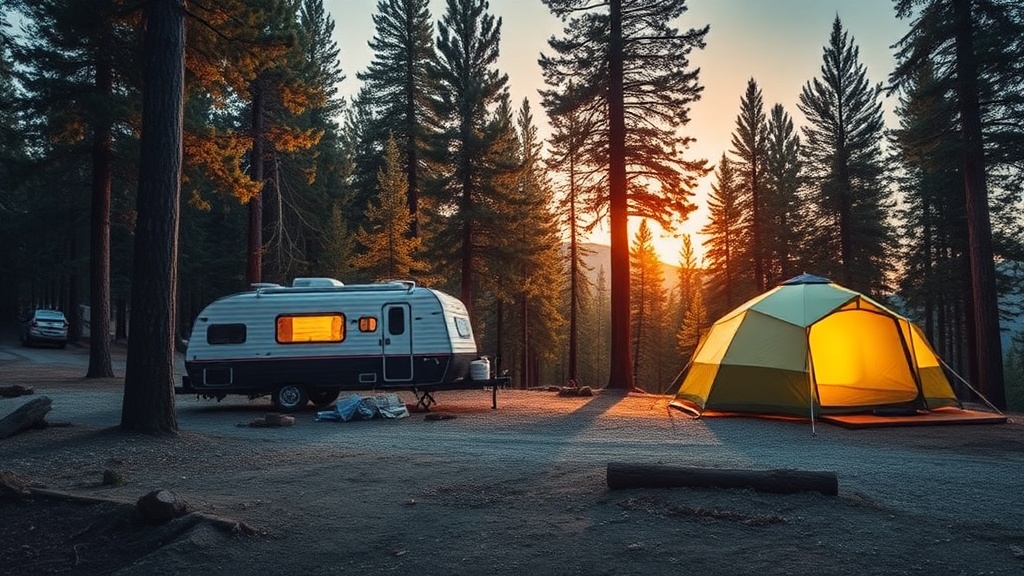
How to Find Quiet Off-Season Campgrounds Worth the Drive

This guide covers exactly how to locate quiet, worthwhile campgrounds during the off-season—when crowds thin out, prices drop, and nature returns to its unhurried rhythm. You'll learn where to search, what gear matters most, how to evaluate campground quality from a distance, and which real-world resources cut through the noise. For anyone tired of fighting for reservations and listening to generators hum until midnight, off-season camping offers a different experience entirely.
Where Can You Camp in the Off-Season Without the Crowds?
National forests, Bureau of Land Management (BLM) territories, and state parks with year-round access are your best bets for solitude after peak season ends. These public lands don't shut down completely when Labor Day passes—many campgrounds simply switch to self-service or reduced-fee status. The trick is knowing which ones remain accessible (and legal) once the gates stop being staffed.
Start with Recreation.gov for federal campgrounds and ReserveAmerica for state parks. Both sites let you filter by "season" or "year-round availability." That said, not every campground marked "open" in December has running water or plowed roads. Always call the local ranger station. A five-minute conversation saves a three-hour drive to a locked gate.
Some of the quietest off-season experiences happen at Corps of Engineers campgrounds near reservoirs—places like Lake Shelbyville in Illinois or Raystown Lake in Pennsylvania. After October, these sites often drop to half capacity. The loops closest to boat ramps empty first. Campers who don't mind a short walk to the water can claim sites that would cost triple during summer weekends.
Private campgrounds deserve attention too. KOA locations with "path" or "Holiday" designations frequently keep a portion of their sites open through winter. The catch? Amenities shrink. Pools close. Stores scale back hours. But the hookups usually work, and the price reflects the bare-bones service.
How Do You Evaluate a Campground Before Making the Drive?
You verify three things: road access, facility status, and recent camper reviews from the exact month you plan to visit. Satellite imagery helps, but it won't tell you if the dump station froze last week or if the host decided to close early due to staffing shortages.
Here's a practical checklist to run through before booking any off-season site:
- Call ahead. Speak to a human. Ask about road conditions, water availability, and whether the camp host is still on-site.
- Check recent reviews. Filter Campendium or The Dyrt for reviews from the same month (not just "winter"—January and March are different beasts).
- Study the elevation. A campground at 4,000 feet in Arizona might be pleasant in November. At 7,000 feet, it's snowed in.
- Look for backup options. Nearby dispersed camping or Walmart parking lots keep you from being stranded if the gate is locked.
- Confirm your rig can handle the approach. Forest Service roads often go unmaintained after October. A low-clearance travel trailer won't make it far.
Worth noting: some of the most peaceful off-season campgrounds have terrible cell service. That's part of the appeal for many people—but not if you're working remotely or need to check in with family. Download offline maps through Gaia GPS before leaving pavement.
What Gear Makes Off-Season Camping Comfortable and Safe?
The right gear bridges the gap between "miserable and cold" and "cozy enough to stay another night." You don't need expedition-level equipment for shoulder-season camping, but you do need to think beyond the standard summer kit.
Insulation matters most. A quality four-season tent—like the REI Co-op Base Camp 4—holds heat better than its three-season cousins. For RV and van campers, window insulation (Reflectix cut to fit, held with Velcro) makes a dramatic difference in how hard the furnace works. A Mr. Buddy Portable Heater run on propane canisters works well for smaller spaces, though ventilation is non-negotiable.
Sleeping systems need attention too. Bags rated 10–15 degrees below the expected low temperature keep sleep comfortable. Pair a Therm-a-Rest NeoAir XTherm sleeping pad with a 0-degree bag, and most campers handle nights down to the 20s without shivering. Layering isn't just for clothing—bring an extra quilt or throw. It's easier to peel off a layer at 2 a.m. than to will yourself warmer.
| Gear Category | Summer Camping | Off-Season Camping |
|---|---|---|
| Tent | 3-season mesh-heavy model | 4-season or solid-wall with rainfly |
| Sleeping pad | Lightweight inflatable (R-value 1–3) | Insulated inflatable (R-value 5+) |
| Lighting | Solar lantern | Rechargeable LED + headlamp with red mode |
| Water storage | Hydration bladder | Insulated jugs or heated hose |
| Cooking | Compact backpacking stove | Propane stove with windscreen |
Kitchen gear shifts in cold weather too. Butane canisters perform poorly below freezing. Isobutane-propane mixes (like MSR IsoPro) work better, but white gas stoves—such as the MSR WhisperLite—remain the gold standard for true cold-weather cooking. The thing about winter meals? Hot food isn't a luxury when the temperature drops. It's morale.
Are Off-Season Campgrounds Actually Cheaper?
Yes—often by 30 to 50 percent, and sometimes more if you're willing to dry camp without hookups. National park campgrounds that charge $35 per night in July sometimes drop to $15 or $20 by November. State parks follow similar patterns. Private RV parks may slash rates to $25–$35 per night for full hookups, a fraction of peak-season pricing.
The real savings, though, come from flexibility. When campgrounds operate on a first-come, first-served basis in the off-season, you avoid reservation fees entirely. No scrambling six months ahead. No surge pricing. You simply arrive, pay the iron ranger, and pick your spot. For travelers with unpredictable schedules—contract workers, retirees, anyone chasing weather—this freedom is worth more than the discount itself.
Here's the thing about budgeting: off-season camping saves money on the site, but it can cost more in preparation. You might invest in a better sleeping bag, tire chains, or a portable generator. Fuel economy drops in cold weather. Propane use spikes. The math still works out favorably for most people, but only if you plan for the hidden costs rather than pretending they don't exist.
What Are the Real Downsides of Off-Season Camping?
Fewer services, shorter daylight hours, and unpredictable weather top the list. Bathrooms may be locked. Water spigots get shut off to prevent freezing. Camp hosts—who usually handle minor issues and keep rules enforced—often leave by mid-October. That means self-reliance isn't optional.
Wildlife behaves differently in the off-season too. Bears are less active, but rodents get aggressive about finding warmth and food. Mice have chewed through wiring in countless trailers stored (or occupied) in cold campgrounds. Steel wool, peppermint oil, and meticulous food storage are your defenses.
Weather windows shrink. In summer, a rainy afternoon is an inconvenience. In late fall or early spring, a cold front can turn dangerous fast. Hypothermia sets in quicker than most people expect, especially when wind and dampness combine. Check forecasts obsessively. Have an exit plan. Know the location of the nearest motel or warming center.
The catch? All of these challenges are manageable with preparation. And the payoff—empty trails, silent mornings, campgrounds that feel like they're yours alone—makes the extra effort worthwhile for campers who genuinely value peace over convenience.
How Do You Find the Best Quiet Campgrounds in Your Region?
You map a radius you're willing to drive, identify the public land managers within that radius, and then contact them directly for off-season availability. This sounds old-fashioned, but it works better than apps because land management offices know which roads are plowed, which loops have been closed for repairs, and whether the vault toilets are still being pumped.
Some regions shine for off-season camping. The desert Southwest—Arizona, New Mexico, Southern California—delivers mild temperatures from November through March. BLM land around Quartzsite, Arizona, becomes a temporary city of snowbirds, but venture twenty minutes outside the main corridors and solitude is easy to find. The Gulf Coast of Texas and Florida offers beach camping without the spring break chaos if you visit in January or February.
In the Mountain West, lower-elevation state parks stay accessible longer. Colorado's Lake Pueblo State Park and Utah's Jordanelle State Park both accommodate campers well into late fall. Pacific Northwest coastal campgrounds—like those along Oregon's Cape Lookout or Washington's Long Beach Peninsula—see dramatically reduced crowds after September, though rain is a given.
For the absolute quietest experiences, combine off-season timing with midweek arrival. A Tuesday in late October feels completely different from a Friday. Even popular campgrounds—places that book out months in advance during summer—often have half their sites empty on a Wednesday in November. Arrive before dark, scope out the loop, and claim a site with the view and spacing that summer crowds never get to choose.
Quiet off-season campgrounds don't find you. You find them—through a mix of digital tools, direct phone calls, and a willingness to trade some comfort for space. The best ones are rarely advertised. They're simply open, affordable, and waiting on the other side of a drive that's always shorter than it looks on the map.