I've Drunk From Hundreds of Backcountry Water Sources — Here's What Actually Keeps You Safe

I got giardia once. September 2009, somewhere along the John Day River in eastern Oregon. I was lazy, the water looked crystal clear, and I told myself I'd been drinking from streams for years without a problem.
Three days later I was curled up in the back of my van wishing I'd never been born.
That was the last time I skipped water treatment. Not because I'm cautious by nature — I'm really not — but because giardia is the kind of lesson your body doesn't let you forget.
Clear Water Means Nothing
I need to say this up front because I still hear it at campgrounds constantly: "Oh, the water's running fast, it's fine." Or "This spring is natural, it's clean."
No. Stop. You cannot see giardia, cryptosporidium, or most of the bacteria that will ruin your trip. Crystal clear mountain water can be loaded with parasites from elk, deer, or the guy who camped upstream last week and didn't bury his waste properly.
I treat everything now. Every creek, every river, every spring I haven't personally verified with the land manager. The only exception is water piped directly from a tested municipal source at a developed campground — and even then I've had some sketchy campground spigots that made me think twice.
The Four Methods That Actually Work
After 22 years of trying basically everything, water treatment falls into four categories. Each one has a specific use case where it's the right choice.
1. Pump Filters (My Workhorse)
I've been using some version of a pump filter since 2004. Currently running a Katadyn Hiker Pro, which replaced a Katadyn Hiker that lasted me eleven years before the pump housing cracked. Before that, an MSR MiniWorks that was indestructible but weighed a ton.
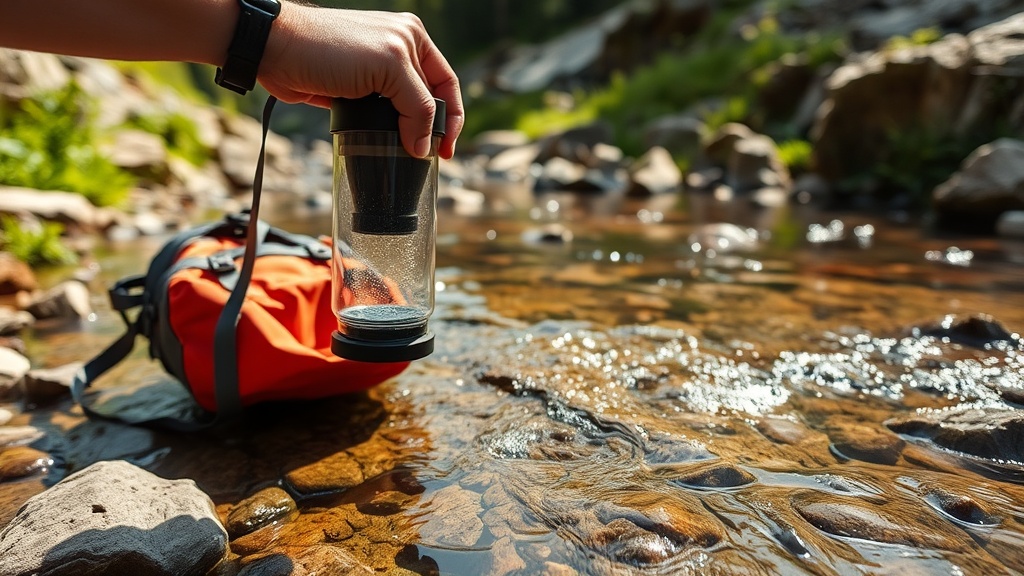
What I like: You get drinkable water immediately. No waiting, no chemicals, no UV batteries to die on you. Fill a dirty bag, pump it through, drink. At camp I can filter enough water for Mike, me, and the dog in about ten minutes.
The honest downside: Pump filters handle bacteria and protozoa but most don't get viruses. In North America, that's generally fine — viral waterborne illness from backcountry sources is rare here. But I wouldn't rely on a pump filter alone in Central America or Southeast Asia. Also, they clog. Mine gets noticeably slower after about 200 liters and needs a field cleaning, which involves scrubbing the ceramic element with a provided pad. Not hard, but you need to remember to bring the pad.
My actual recommendation: If you're car camping or base camping in North America, a pump filter is the way to go. Period. The Katadyn Hiker Pro runs around $70 and it'll last you years if you maintain it.
2. Gravity Filters (For Groups and Lazy Days)
I picked up a Platypus GravityWorks 4-liter system in 2018 and it changed how Mike and I handle water at camp. You fill the dirty bag, hang it from a tree branch, and let gravity do the work. Walk away. Come back to four liters of clean water.
What I like: Zero effort after setup. Perfect for base camp. We hang ours from the awning bracket on the Transit and forget about it. Also great for groups — we've used it when camping with friends and it keeps up with six people without anyone standing around pumping.
The honest downside: It's slow compared to pumping. About 1.75 liters per minute, which sounds fine until you're thirsty RIGHT NOW and the bag's still dripping. Also, the bags develop pinhole leaks after a couple seasons. I've patched mine with Tenacious Tape twice. Platypus sells replacement bags but they're $20 each, which adds up.
My actual recommendation: If you have a base camp setup and you're staying put for a few days, a gravity filter is unbeatable for convenience. Bring a backup method for the hike in.
3. Chemical Treatment (My Backup's Backup)
I always carry Aquamira drops in my pack. Always. Even when I have a filter. Even on day hikes from camp. It's a two-part chlorine dioxide system — mix the drops, add to water, wait 15-30 minutes.
What I like: It weighs nothing, it never breaks, and it kills everything including viruses. It's the only treatment I trust for international travel. Also, the shelf life is basically forever if you keep the bottles sealed.
The honest downside: You have to wait. Fifteen minutes minimum for bacteria, thirty for crypto. When you're hot and thirsty and staring at a bottle of water you can't drink yet, those minutes feel like hours. Also, it tastes faintly like a swimming pool. I've gotten used to it. Mike hasn't. He complains every time.
My actual recommendation: Carry it as a backup regardless of your primary method. A set of Aquamira drops costs $15 and lasts for 60 liters. There is no lighter or more reliable insurance policy.
4. UV Treatment (Clever but Fragile)
I owned a SteriPEN for about three years. The concept is great — stick it in your water bottle, push the button, UV light kills everything in 90 seconds. Science in a tube.
What I like: Fast, effective, and the water tastes like nothing because you're not adding chemicals.
The honest downside: It runs on batteries. Batteries die at the worst times. I was three days into a trip in the Owyhee canyonlands when my SteriPEN's batteries gave out and I didn't have spares because I'm apparently incapable of checking battery levels before a trip. Also, it only treats one liter at a time, so filling up water for two people and a dog takes forever. And — this is the one that killed it for me — it doesn't work well in murky or silty water. The UV light needs to penetrate the water to work, so if you're filtering from a muddy river, you need to pre-filter anyway. At which point, just use the filter.
My actual recommendation: Fine as a lightweight option for solo backpacking with clear water sources. Not what I'd rely on as a primary system for anything else.
The One-Two Combo I Actually Carry
For car camping and van trips: Katadyn Hiker Pro as primary, Platypus GravityWorks at base camp, Aquamira drops in my day pack. Three systems because I've been burned by relying on just one.
For backpacking: Squeeze-style filter (I've switched between Sawyer and Platypus — both work, both have quirks) plus Aquamira drops as backup.
For international travel: Aquamira drops as primary, period. Nothing mechanical to break, nothing electronic to die.
The Mistake I See at Every Trailhead
People buy a water filter, throw it in their pack, and never practice with it before they're standing at a creek bed in the backcountry wondering why water won't flow through the thing.
Practice at home first. Fill your dirty bag from the kitchen sink. Run water through the filter. Figure out the flow rate, learn how to backflush, find out how the pieces connect before you're dehydrated and frustrated and the sun's going down.
Same goes for chemical treatment. Mix the drops at home, treat a glass of water, drink it. Know what it tastes like so you're not caught off guard in the field.
I watched a couple at a trailhead in the Wallowas last summer spend twenty minutes trying to figure out how to connect their brand-new Sawyer Squeeze to a water bag. They'd bought it the week before and never opened the package. The instructions were getting wet, the bags were falling over, and their kids were melting down. It was painful to watch. I eventually walked over and helped, but that situation was completely avoidable.
A Note About Dogs
Koda drinks from every puddle, creek, and lake he can find, and I've given up trying to stop him entirely. But at camp, he gets filtered water in his bowl just like we do. Giardia hits dogs too, and the vet bills are worse than the human version.
If you camp with a dog, factor their water consumption into your filtering plan. Koda goes through about a liter a day in cool weather, two liters when it's hot. That adds up fast if you're pumping by hand.
Stop Overthinking It — Just Treat Your Water
The best water treatment system is the one you'll actually use every time. If you love the ritual of pumping, pump. If you're lazy like me at base camp, hang a gravity filter. If you want lightweight and simple, carry chemical drops.
But do something. Every time. Even when the water looks perfect. Even when the campground host says "oh, everybody drinks from that creek."
My colon and I have a deal: I treat the water, and it doesn't send me to the ER. Seventeen years running since I broke that deal. I plan to keep the streak going.