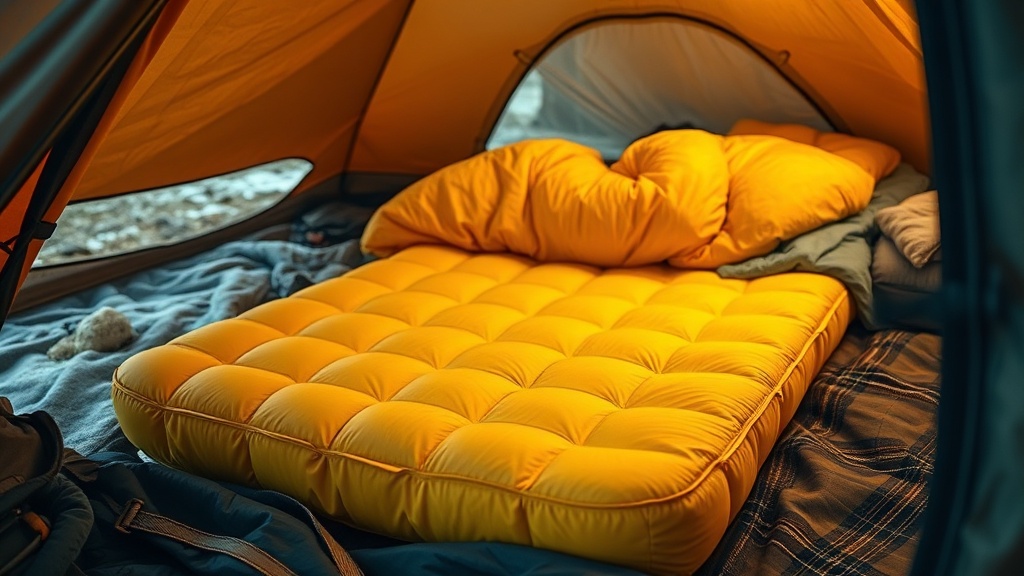
Stop Upgrading Your Sleeping Bag (Upgrade Your Pad Instead)

Look, after 22 years and 600+ nights outdoors, I can tell you exactly where most cold, miserable nights start.
Not in your sleeping bag.
Under your back.
Every March, I watch campers pull gear out of storage and make the same move: they shop for a warmer bag, then keep sleeping on a low R-value pad they bought years ago. Then they text me from camp at 6 AM saying, "I froze all night."
If this is your first spring trip window, fix your sleep system first. I laid out the full prep sequence in my Spring Camping Gear Checklist That Actually Matters, but this post is the part that saves your night.
Why Do You Wake Up Freezing at 2 AM Even in a Warm Sleeping Bag?
You wake up freezing because the ground is pulling heat out of you faster than your bag can keep up.
Here’s the thing: insulation under your body gets compressed. Compressed insulation barely insulates. So even if your bag is rated to 15F, your pad is doing most of the work against conductive heat loss from cold ground.
Early March is sneaky for this. The air can be 50-55F in the afternoon and still feel friendly. The ground can still be in the 30s overnight, especially in forested or high-desert sites. That gap is where bad nights happen.
I learned this the hard way in central Oregon shoulder season years ago: decent bag, garbage pad, zero sleep by 2 AM. That trip changed how I buy sleep gear. I stopped chasing bag temp ratings first.
What Does Sleeping Pad R-Value Actually Mean in the Real World?
R-value is the pad’s resistance to heat loss to the ground, and higher numbers keep you warmer from below.
That’s it. No marketing poetry needed.
The reason this number matters more now than it used to: brands are generally using ASTM F3340 testing, which gives us a shared baseline for comparing pads. It’s still lab data, not a guarantee of your personal comfort, but at least we’re not comparing made-up numbers from different test methods anymore.
My field rule after two decades:
R 1-2.5: hot summer onlyR 3-4.5: mild 3-season useR 5-6: shoulder season and many cold sleepersR 6.5+: cold ground, high elevation, winter-ish conditions
If you sleep cold, bump that up. If you’re over 40 and your hips/shoulders are already cranky, bump it up again.
If you want broader context on early-season failures, read Why 3-Season Gear Fails in Spring (and What Works).
What Failed in My Gear Graveyard and What Did It Teach Me?
Most pad failures are predictable, and they usually show up when temperatures drop.
I keep a literal Rubbermaid bin in my garage called the gear graveyard. Pads earn a spot there for the same reasons, over and over:
- Slow leaks that only show up after midnight
- Delaminating baffles after a season or two
- "Insulated" pads that feel warm in July and useless in April
- Valve issues in cold temps
One of the worst: a budget insulated inflatable that slept fine until a shoulder-season boondocking trip in eastern Oregon. Around 3 AM it softened, then bottomed out. I finished the night folded over a closed-cell foam dog pad we carry for Luna. Back pain for two days. Trip shortened. Pad retired.
That wasn’t bad luck. That was cheap gear failing in exactly the conditions that matter.
I keep an ongoing breakdown of these failures in The Gear Graveyard: What Failed and Why.
What's the Best Sleeping Pad for Cold Weather Camping?
The best cold-weather pad is the one with proven high R-value, reliable construction, and enough thickness that you actually sleep.
Two strong examples with current price checks on March 5, 2026:
- Therm-a-Rest NeoAir XTherm NXT: R-value
7.3; REI lists regular around$239.95. - NEMO Tensor All-Season: R-value
5.4; REI listings are around$199.95-$229.95depending on size.
Want a lower-cost middle ground? The REI Co-op Helix Insulated Air Pad sits at R-value 4.9 and is often much cheaper, but it is still a clear step up from the bargain-bin pads that end up in my gear graveyard.
Are those cheap? No.
Are they worth it if you camp 20-40 nights a year? In my experience, yes. Buy once, cry once.
And for the record, expensive doesn’t mean invincible. Even premium pads can leak if abused, so always bring a small repair kit and know how to use it before dark.
Should You Upgrade Your Sleeping Pad or Sleeping Bag First?
Upgrade your sleeping pad first in almost every spring and shoulder-season scenario.
If your current bag is roughly appropriate for the temps and you’re still waking up cold from below, the pad is the choke point. Fix that first, then reassess your bag.
Upgrade the bag first only if:
- Your current bag is clearly under-rated for expected lows
- Your pad already has enough R-value for the conditions
- You’re warm from below but cold on top
For most people I camp with, the sequence that works is simple:
- Better pad (R-value and comfort)
- Dial in sleep clothing and moisture control
- Then evaluate bag rating
I cover that full layering logic in Cold-Weather Camping Gear That Earned a Permanent Spot.
How Do You Build a Camping Sleep System That Actually Works?
Build from the ground up, because that’s where most heat loss starts.
Use this quick setup before your next spring trip:
- Check expected nighttime low and ground conditions, not just daytime highs.
- Match pad R-value to that reality.
- Test your pad overnight at home to catch leaks early.
- Pair with a bag that matches lows with a margin.
- Bring a thin foam backup for cold trips and puncture insurance.
That last one matters. A foam backup has saved multiple trips in my orbit.
And one non-negotiable while we’re here: Leave No Trace. Better sleep means better decisions, and better decisions mean cleaner campsites for the next crew.
FAQ: Sleeping Pad R-Value and Spring Camping
What R-value sleeping pad do I need for spring camping?
For most spring camping with cold ground, start around R 5 and go higher if you sleep cold.
If your nights are dipping toward freezing or you’re on snow-adjacent ground, R 6+ is usually the safer play.
Is an expensive sleeping pad worth it?
If you camp often, yes, a premium pad is usually worth the money.
You’re buying sleep quality, fewer failures, and fewer ruined trips, not just ounces and specs.
Is a sleeping pad more important than a sleeping bag?
In cold-ground conditions, yes, the pad is often more important.
A great bag can’t fully compensate for poor insulation underneath you.
Can I stack two pads for more warmth?
Yes, stacked pads increase total insulation and can rescue shoulder-season nights.
Inflatable plus foam is a solid combo when ground temps are low.
How long should a good sleeping pad last?
A well-made pad should last years, not one season.
Lifespan depends on care, usage frequency, and terrain, but frequent campers should expect multi-season reliability from quality pads.
After 22 years, here’s my blunt verdict: stop throwing money at lower bag temperature numbers until your pad is dialed. Fix the ground side first and your spring camping sleep system gets dramatically better.
Sources I checked (March 5, 2026)
- Therm-a-Rest NeoAir XTherm NXT at REI
- NEMO Tensor All-Season at REI
- REI Helix Insulated Air Pad (ASTM F3340 note in specs)
- NEMO Flyer page noting ASTM F3340-18 testing language
That’s the real deal. See you out there.