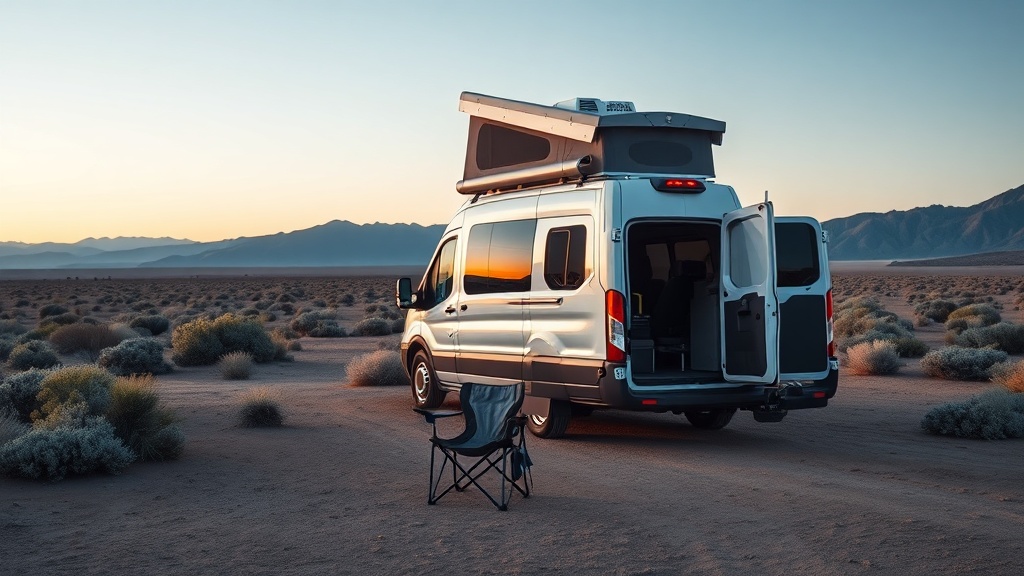
Summer 2026 Campgrounds Are Booked. Here's How to Dispersed Camp Instead.
As of March 5, 2026, if you’re trying to grab prime summer weekends in popular campgrounds, you already know the feeling: everything good is gone, waitlists are chaos, and “maybe a cancellation” is not a real plan.
Look, I’ve been doing this for 22 years. The reservation system is what it is. You can rage-refresh Recreation.gov, or you can pivot to a better strategy: dispersed camping.
Not glamorous. Not easy the first time. But if you learn it, you stop letting a booking calendar run your whole summer.
Reality check: waiting on cancellations is a low-odds strategy
Could you get lucky? Sure.
Should you build your summer around luck? No.
Recreation.gov campground inventory is commonly released on rolling windows (many sites release up to 6 months out, and some release closer in). By early March, the prime Friday/Saturday nights in high-demand parks are usually picked clean by people who booked the day those windows opened.
If your goal is more nights outside, stop spending your evenings fighting booking bots and pivot your energy into learning public-land camping.
What dispersed camping is (and what it is not)
Dispersed camping means camping outside developed campgrounds on public land, usually National Forest or BLM.
Here’s what it is:
- Usually free
- Usually no reservations
- Usually more space and less campground noise
Here’s what it isn’t:
- No hookups
- Usually no toilets
- Usually no potable water
- Usually no trash service
- Not legal “anywhere you can pull over”
That last one matters. A lot.
USFS and BLM both allow dispersed camping in many areas, but rules vary by forest and field office. Stay limits are often around 14 days, then you must move. On BLM lands, the general guidance is often 14 days in a 28-day period, with local variations.
How to find legal dispersed sites (without Instagram roulette)
Instagram geotags are how you end up on private land, closed roads, or a turnaround full of trash. Don’t do that.
Use this process instead.
Step 1: Pick your zone, not a single pin
Start broad.
Pick a National Forest district or BLM field office within your drive range. If you’re in the West, this is easy. If you’re east of the Mississippi, options are fewer but still there.
Your goal is to identify 3-5 candidate roads/areas, not one “perfect secret spot.”
Step 2: Check the legal map first (MVUM for National Forest)
For National Forest land, the Motor Vehicle Use Map (MVUM) is the legal document that tells you where motorized travel is allowed. If a road is not on the MVUM, treat it as closed to motor vehicle use.
Some forests also publish specific dispersed-camping corridor rules (for example, distance you can pull off route). Those details are forest-specific, and they matter.
Practical rule: if your app says “road,” but the MVUM says no, trust the MVUM.
Step 3: Cross-check with satellite imagery
Open Google Earth (or satellite in your mapping app) and inspect your candidate roads.
You’re looking for:
- Existing disturbed clearings (use existing sites, don’t create new ones)
- Turnaround space for your rig
- Slope and drainage (avoid low spots that turn into mud pits)
- Tree canopy for shade/wind protection
- Distance from water and developed areas
If your van needs room to level or your trailer needs swing room, verify that now, not at sunset with three people stacked behind you on a one-lane road.
Step 4: Use apps as filters, not truth
I use apps for trip planning, but I don’t let them make the legal call.
Useful options:
- iOverlander for recent user reports
- Campendium for service notes and road comments
- onX Offroad / Gaia GPS for layered navigation
- Avenza for offline MVUM and agency maps
Here’s the thing: user-generated pins go stale fast. Closures change. Fire restrictions change. Access roads wash out. Treat app data as clues, then verify with the managing agency.
Step 5: Call the local office like an adult
Five-minute phone call. Big payoff.
Ask:
- Are current dispersed areas open right now?
- Any seasonal road closures still in effect?
- Any current fire restrictions?
- Area-specific stay limits or distance-from-road rules?
- Any recent problem areas they recommend avoiding?
This is how you avoid rolling 3 hours to a locked gate.
Golden rules that keep dispersed camping open
The fastest way to lose dispersed access is to camp like a slob. Don’t be that person.
- Leave No Trace is the floor, not the ceiling.
- Pack out every scrap of trash. Yes, even micro-trash and bottle caps.
- Handle human waste correctly. Use a wag bag or dig proper catholes where legal, away from water.
- Respect stay limits. Most areas are around 14-day limits, but local rules vary.
- Don’t invent fire rules. Check current restrictions every trip.
- Don’t drive off-route where not allowed.
I’ve watched great boondocking areas get trashed and then locked down. Access is earned and re-earned every season.
Gear you need to pivot from campgrounds to boondocking
You don’t need a $150K rig. You do need a self-contained setup.
Minimum practical kit:
- Water storage: enough for drinking, cooking, and cleanup (plus buffer)
- Human waste plan: wag bags, portable toilet, or legal cathole setup
- Power plan: battery bank + charging method (solar helps if you stay put)
- Leveling blocks: especially for vans/trailers on uneven pull-offs
- Trash containment: hard-sided bin or sealed bag system
- Offline maps: downloaded before you lose service
- Recovery basics: shovel, traction aid, compressor if you run rough roads
If you can’t handle water, waste, and power for 2-3 days without services, you’re not ready to rely on dispersed camping yet.
A realistic summer game plan (that actually works)
If your July and August weekends are already booked out, here’s the move:
- Pick two public-land zones within 2-4 hours.
- Build a shortlist of legal dispersed areas in each zone.
- Scout one shoulder-season weekend in spring.
- Save 3-5 backup sites per zone.
- Run your first peak-summer trip with multiple options loaded offline.
That gives you flexibility without reservation panic.
Final word
Look, I still book campgrounds when they make sense. But I stopped depending on them a long time ago.
Dispersed camping is not luxury camping. It’s work. It takes planning and responsibility. But once your system is dialed in, you get something reservations can’t guarantee: freedom and options.
And if you care about keeping this option alive, treat public land like it matters. Because it does.
References
- Bureau of Land Management: Camping on Public Lands (dispersed camping and stay-limit guidance): https://www.blm.gov/programs/recreation/camping
- U.S. Forest Service: Dispersed Camping guidance (example forest pages with area-specific limits/rules): https://www.fs.usda.gov/r02/riogrande/recreation/dispersed-camping and https://www.fs.usda.gov/r03/carson/recreation/dispersed-camping
- U.S. Forest Service: MVUM FAQ (legal route designations and map use): https://www.fs.usda.gov/es/visit/maps/mvum-faq
- Recreation.gov example campground release language (rolling window context): https://www.recreation.gov/camping/campgrounds/233187