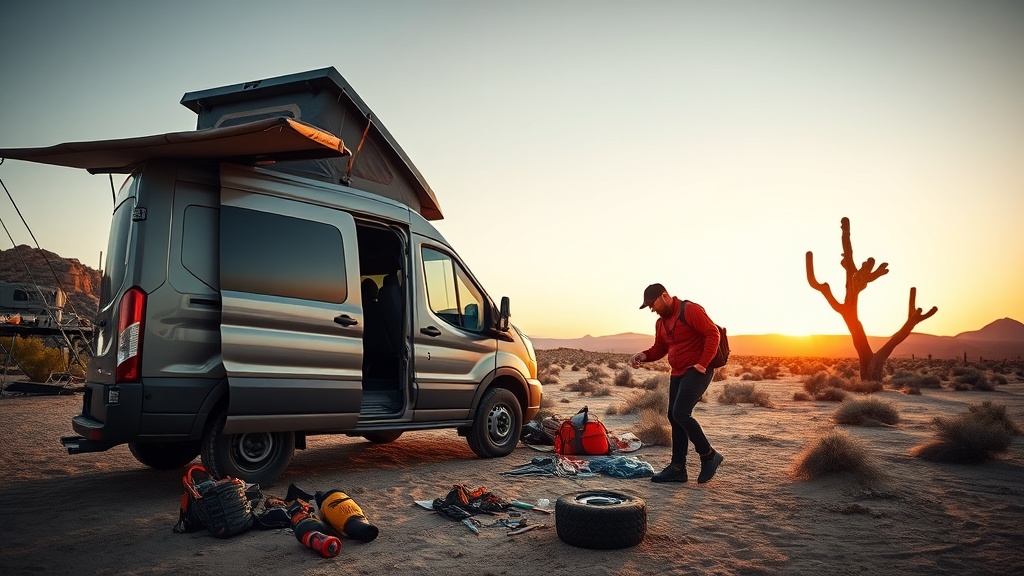
The 10-Point Road-Trip Departure Check I Swear By (After 22 Years on the Road)

# The 10-Point Road-Trip Departure Check I Swear By (After 22 Years on the Road)
Look, after 22 years and 600+ nights in a converted van, I’ve learned that most breakdowns don’t start with a dramatic spark. They start with one skipped step on a Friday-night checklist.
So if you’re about to point your rig down the highway, run this before sunrise if you can. It saves you from turning your dream weekend into a campsite-by-the-phone-call-to-tow-truck story.
I’m still running a 2019 Transit conversion, and this is the system that has kept us moving cleanly through spring through shoulder season chaos.
## 1) Do a 10-minute tire and wheel sanity check
Your tires do not care about how poetic your playlist is.
I start with a visual and a pressure check on all wheels, including the spare. I’m not just looking for tread. I’m looking for:
- cracked sidewalls
- weathering around the bead
- low pressure compared to the sticker pressure
- obvious nicks at the inside shoulder
Then I walk around with one quick rule: if a tire feels “off” in your hand, don’t trust it at 70 mph.
Why: I’ve seen two perfectly “good looking” tires go flat on me because I trusted the tread depth and ignored a sidewall bruise from years of bad parking habits.
## 2) Wiggle every electrical connection you can reach
This is the one people skip.
You can spend thousands on a cool van conversion and lose a day because one loose ground terminal starts arcing at the worst time.
On my departure day, I do this quickly:
- battery terminals: clean and tight
- underhood grounds: seated and untarnished
- fuses and relays: obvious scorch marks
- USB and inverter connections: not hanging by tension
If you’re running a 12V fridge and a couple of charging cables, this is your life-or-death moment for reliability.
## 3) Verify brake and coolant confidence
Not an “if you feel fine” check. A cold engine, engine off, wheels still moving.
I check:
- brake fluid level and color
- brake line routing where mud could hold heat or chafe
- coolant level in the overflow and radiator
One of my ugly truths: a perfect-looking dashboard warning screen can lie to you while hidden leaks become expensive at mile 180.
## 4) Confirm tire inflation for your load, not the sticker in the glove box
People load their van heavy with water, propane, dogs, and that “maybe useful” box in the back, then keep highway inflation like they’re driving empty.
I run a pressure based on actual load and the nearest upcoming weather. In simple terms: heavy load or hot weather gets me a small bump from empty spec, but never above the tire max.
You’re looking for even front-to-back behavior, not just a centerline number on an app.
## 5) Check your propane system like the person who owns your sleep depends on it
If you use propane, you check it twice.
Here’s my rule:
- tank shutoff off when parked in check station
- gauge and hose condition
- no smell, no brittle-looking line, no loose clamp
I keep a simple leak test kit and a few approved repair materials in the kit box. If there is a doubt, I wait and swap equipment before leaving.
Not dramatic, not glamorous, but this saves headaches and keeps your neighbors from seeing orange in bad places.
## 6) Confirm fluids, antifreeze, washer, and windshield integrity
If your windshield has a chip you can catch a fingernail in, stop and fix that first.
I do three quick items:
- windshield washer level
- windshield integrity + wipers
- defrost and lights function after dark check
You’re not done until cold and heat both work in a dark garage test.
## 7) Top off your fresh, make a water waste plan, and tape your hose routing
This sounds basic until you forget one part and start watering your dog from the last gallon.
Before I go, I verify:
- fresh and waste system valves/hoses are where they should be
- your camp toilet setup can be managed at each planned stop
- no hose is kinked where it can back-up at speed
If you’re boondocking without hookups for more than a day, this is priority one.
## 8) Reset your recovery kit to the way you can actually deploy it in the dark
The most expensive kit in my van is the one I don’t use. The useful kit has five things I can find when tired:
- quality shovel and traction board
- patch kit that matches the tire pressure setup
- spare serpentine/washer fluid and a few bulbs
- high-lumen light with fresh battery
- paper map backup and roadside waypoints saved in two apps
If you need “two minutes” to unpack your kit, you have already failed your own test.
## 9) Load-out reality check: if you can’t explain your plan in 30 seconds, simplify
This is where many road trips die before Day 2.
My check is brutal but honest:
- food and water: enough for three days minimum
- one day of backup gas if your route is remote
- warm layer for shoulder-season dawns
- charger path and shore-power assumptions that require no one to improvise at 2 AM
I’d rather leave one “nice-to-have” item and carry one less chair than panic later.
## 10) Pre-load route alternatives before you leave signal range
If your route is one-way and you run into weather or closure, you’re already stuck in “Google search mode.”
I use one primary route and two backups in offline maps, plus a “no-go” rule:
- if wind advisory or fire closure changes by morning, do not roll blind
- confirm your first two fuel stops in advance
- choose a fallback campsite every night, then move only if clear
This changed everything for us. We used to bounce through unknown roads because we felt behind. Now we carry an exit strategy from the first mile.
## My unromantic verdict
I’m not interested in Instagram-perfect departure rituals.
I want a departure system that survives a cold start and a messy day. The posts and reels make this look easy. The real trick is discipline, not gear.
Run this 10-point check every time you head out. Not because it’s fashionable. Because your gear is tougher than you think, but only if you treat it like a machine instead of a toy.
If you’re running a converted van life setup, this checklist has already paid for itself in fewer bad surprises. We’re not less adventurous by checking things properly first. We just get to be adventurous for longer.
This post is based on my own setup and road-trip use. I’m sharing what’s worked for 22 years of frequent camping, not a perfect checklist from a showroom.