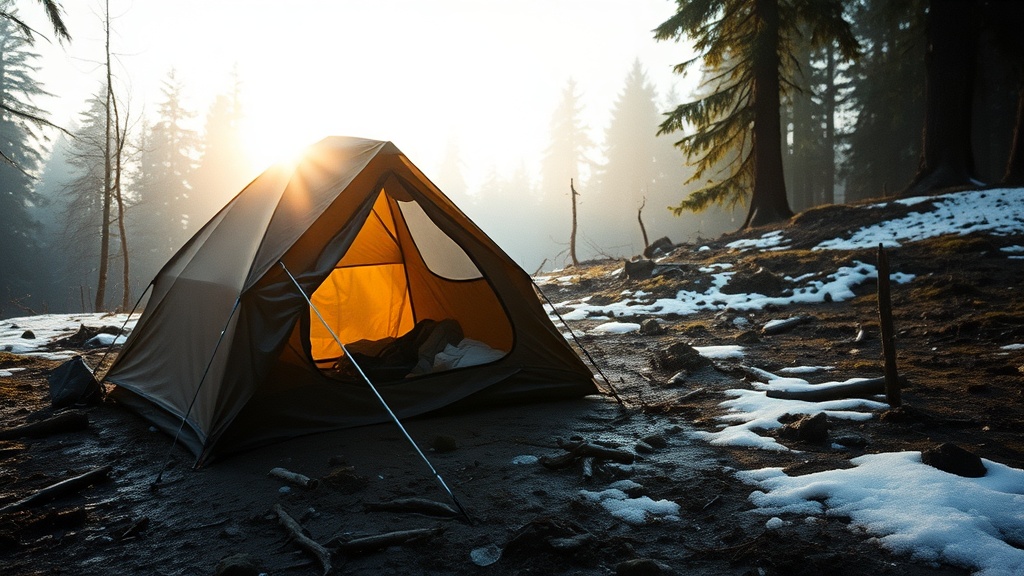
Why “3-Season” Gear Fails in Spring (And What Works)

It’s March 5, and I know exactly what’s happening: everyone’s stir-crazy, the sun pops out for one afternoon, and people start pulling “3-season” gear out of the garage like winter is over.
Look, after 22 years and 600+ nights outside, here’s the blunt truth: early spring is where “3-season” marketing and real-world weather stop agreeing.
I’ve frozen in April in the Cascades with a “20-degree bag.” I’ve had tent poles crack on a windy shoulder-season night. I’ve watched people bring summer pads in March and spend the entire night awake, teeth chattering.
If you only remember one thing from this post, make it this:
Your sleeping pad insulation matters more than your sleeping bag rating in spring.
What “3-Season” Actually Means (And What It Doesn’t)
Most brands and retailers position 3-season tents as spring/summer/fall shelters. In practice, that usually means late spring through early fall, not the first week of March when nights can still drop hard and storms can roll in sideways.
A 3-season tent is typically designed to balance ventilation, weight, and weather protection. Great for most trips. Not magic for shoulder-season chaos.
What goes wrong in spring:
- Wind shifts faster and stronger than forecast
- Wet snow or heavy sleet shows up when you expected rain
- Ground is saturated, which spikes humidity and condensation
- Big day/night temp swings turn a “mild” forecast into a cold overnight
3-season gear isn’t automatically bad. It’s just often used outside its real comfort zone.
The Number That Actually Matters: Sleeping Pad R-Value
Here’s the thing: your sleeping bag only insulates where loft exists. Under your body, loft gets crushed. Then the ground pulls heat out of you all night.
That’s why pad R-value is the first number I check for spring camping gear.
I’m seeing way too many people obsess over bag ratings while sleeping on low-R air pads. That combo fails constantly in March and April.
My practical rule for shoulder season:
- R 1-2: Summer-only for most people
- R 2-4: Mild 3-season, can work in warmer spring lows
- R 4.5+ : Real shoulder-season safety margin
- R 5+ : Where I like to be for cold, damp spring nights in the PNW/high desert
Current examples I’d trust in spring:
- Therm-a-Rest NeoAir XTherm NXT (R 7.3, currently around $229.95-$269.95 at REI)
- NEMO Tensor All-Season (R 5.4)
- Exped Dura 5R (R 4.8)
- REI Co-op Helix Insulated (budget-friendlier, roughly $169-$199)
Buy once, cry once applies here. A warm pad is never money wasted.
Why Sleeping Bag Ratings Mislead People in Spring
I’m not anti-rating. I’m anti-misunderstanding ratings.
ISO/EN-style bag ratings are useful, but many campers treat the printed number like a guaranteed comfort promise. It isn’t.
A “20F” bag can be miserable at 30F if:
- your pad R-value is too low
- your base layers are damp
- you ate a light dinner and went to bed cold
- condensation soaked your insulation overnight
In my logs, most “my bag failed” nights were actually “my sleep system failed.”
System beats single item. Every time.
Condensation: The Spring Problem Nobody Wants to Talk About
Spring camping is damp camping. Period.
And condensation is the quiet gear killer in both tents and vans.
In tents, warm moist air hits cold fabric and turns your walls into a drip machine by 3 a.m. In vans, same physics, just metal walls and windows.
What works:
- Prioritize airflow even when it feels counterintuitive (small venting beats sealed damp air)
- Don’t dry wet clothes inside your sleep space if you can avoid it
- Avoid low cold pockets near water when possible
- Wipe down condensation before bed and again at wake-up
- Keep insulation away from wet tent walls
- In vans: crack a vent/window and run managed airflow overnight
If you skip condensation management, your “warm” setup gets progressively colder every night.
The Gear Graveyard: What Failed Me in Spring
I keep a Rubbermaid bin in the garage called the gear graveyard. Spring failures are overrepresented.
A few repeat offenders:
- Fiberglass tent poles that splintered after cold, windy setup cycles
- Budget uninsulated air pads (felt fine in July, absolute misery in April)
- “Water-resistant” sleeping bag shells that wetted out from repeated condensation contact
- Bargain rainflies with weak coatings that started misting through in sustained spring rain
I’m not saying you need premium everything. I am saying spring exposes weak links fast.
What Works for Me in March and April
My shoulder-season baseline:
- True insulated pad, minimum R 4.5 (preferably 5+)
- Bag rated colder than forecast low by a useful margin
- Dry sleep clothes only (never the damp hiking layers)
- Shelter with reliable guy-out points for spring wind
- Condensation plan before bedtime, not after you’re soaked
- Backup warm layer I can sleep in if temps drop unexpectedly
For van camping, add this:
- Ventilation strategy every night
- Moisture management in the morning (wipe-down + airing)
- Don’t cook a huge steam-heavy meal inside with everything closed up
Leave No Trace in Mud Season (This Matters)
Spring means soft trails, fragile shoulders, and campsites that get trashed fast by good people making bad “I’ll just go around this puddle” decisions.
Leave No Trace guidance is clear here: when trails are muddy, go through the mud, not around it, so you don’t widen trail damage.
Same goes for campsites:
- Camp on durable surfaces
- Don’t create new pads because the existing one is messy
- Respect closures and thaw-season restrictions
- Keep vehicles off soft ground that ruts easily
Shoulder-season access is a privilege. Treat it like one.
Bottom Line
“3-season” gear can absolutely work in spring, but only if you build your system for volatility, not optimism.
The campers who sleep warm in March aren’t lucky. They’re dialed in on the numbers that matter, especially pad R-value, and they manage moisture like it’s part of the job.
That’s the real deal after 22 years.
Do your own research, but if you’re heading out this month, fix your pad first. Then everything else gets easier.