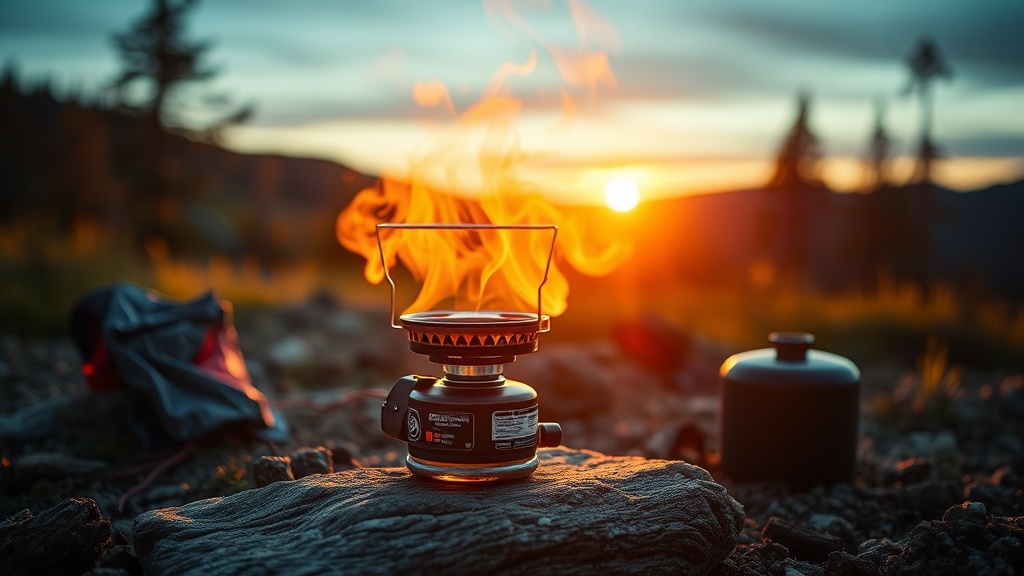
Why Your Portable Camp Stove Might Be Failing You

You are sitting at your camp table in the high desert of Moab, Utah, trying to boil water for your morning coffee, but the flame on your single-burner butane stove is nothing more than a weak, sputtering orange flicker. You turn the dial, hoping for more heat, but the stove remains unresponsive or, worse, shuts off entirely right as the water reaches a simmer. This isn't just an inconvenience; a failing stove can ruin your morning routine and, in colder environments, can lead to inadequate food preparation. This post examines the technical reasons why portable camp stoves fail, from fuel issues and altitude problems to maintenance neglect, and provides practical solutions to ensure your cooking gear remains reliable on the road.
The Fuel Factor: It’s Often Not the Stove
Before you assume your stove is broken, you must investigate your fuel source. Most portable stoves used in van life or car camping rely on either butane canisters, isobutane-propane mixes, or liquid propane. Each has specific physical limitations that can cause performance issues.
Temperature and the Vapor Pressure Problem
The most common reason for a stove failing to produce heat is the ambient temperature. Butane, the primary fuel in many inexpensive single-burner stoves, has a relatively high freezing point. If you are camping in the Sierra Nevada mountains during the shoulder season, the liquid fuel inside your canister may not be vaporizing efficiently. When the fuel cannot turn into gas, the stove cannot burn it. If you see a weak, orange flame, your fuel is likely too cold.
To combat this, avoid using pure butane in temperatures below 40°F (4°C). Instead, switch to a 70/30 or 80/20 isobutane-propane blend, such as the canisters produced by Jetboil or MSR. These blends have a much lower freezing point and maintain higher vapor pressure, ensuring a steady flame even when the temperature drops. A pro tip for cold mornings is to keep your fuel canister inside your sleeping bag or a warm part of your van overnight to ensure it is at room temperature when you go to use it.
Canister Depletion and the "Last Bit" Illusion
A canister might feel heavy, but it may not have enough pressure left to sustain a flame. As the liquid level drops, the pressure inside the canister decreases. If you are using a stove with a regulator, it might shut off the flow of gas entirely once it hits a certain threshold to prevent a dangerous situation. Never rely on a canister that is nearly empty for a meal that requires long, sustained cooking times, such as simmering a hearty stew.
Environmental Obstacles: Wind and Altitude
Your stove might be functioning perfectly, but the environment around you could be working against it. Understanding how physics affects combustion is essential for successful backcountry cooking.
Wind Interference and Heat Loss
Wind is the enemy of efficient combustion. A gusty day at a campsite in the Oregon Coast can strip heat away from your cookware before it ever reaches your food. If your stove does not have integrated wind protection, you are losing a significant percentage of your thermal energy to the air. This results in a "failed" cooking experience where the water takes twenty minutes to boil instead of five.
To fix this, use a dedicated windscreen. You can use a commercial folding aluminum windscreen or even build one using heavy-duty aluminum foil. However, be careful: if your windscreen is too close to the burner, it can trap heat and cause the stove to overheat and shut down via its internal safety mechanism. Always maintain at least a two-inch gap between the flame and your wind protection.
The Altitude Effect on Combustion
As you climb into higher elevations, such as the Rocky Mountains, the air becomes thinner. There is less oxygen available to support the chemical reaction of combustion. This can lead to an incomplete burn, characterized by a yellow or orange flame and a buildup of soot on the bottom of your pots. This soot isn't just a mess; it’s a sign that your fuel isn't burning cleanly, which can eventually clog the burner ports.
When cooking at high altitudes, you may need to adjust your cooking technique. Since evaporation happens faster at high altitudes, your liquids will disappear more quickly. Keep a lid on your pots at all times to retain both heat and moisture. If you are using a stove with an adjustable air intake, you may need to experiment with the setting to find the sweet spot for the thinner air.
Mechanical Failures and Maintenance Neglect
If your fuel is warm, your altitude is reasonable, and you are protected from the wind, the issue is likely mechanical. Neglecting the maintenance of your gear is a common mistake among travelers who rely on their gear for every meal.
Clogged Burner Ports
Over time, microscopic debris—dust, spilled food, or even tiny bits of insect matter—can clog the small holes (ports) through which the gas exits the stove. A clogged port causes uneven heating and can cause the flame to "jump" or flicker unpredictably. This is common if you cook in dusty environments like the Mojave Desert without a cover for your stove.
To clean a burner, use a soft-bristled brush or a thin piece of wire (like a single strand from a wire brush) to gently clear the ports. Do not use a toothpick or anything that could break off inside the hole. After cleaning, use a can of compressed air to blow out any remaining debris. Regular cleaning prevents the need for a replacement stove entirely.
Faulty Valves and O-Rings
If you notice a smell of gas before you even light the stove, you have a leak. This is often caused by a degraded O-ring or a faulty valve. In many portable butane stoves, there is a small rubber gasket where the canister connects to the stove. These gaskets can dry out, crack, or become compressed over time, especially if stored in a hot vehicle or a sunny van interior.
If an O-ring is damaged, the stove is no longer safe to use. Do not attempt to "patch" a gas leak with tape or glue. Instead, keep a stock of replacement O-rings or canisters with fresh seals. If the leak is coming from the internal valve of the stove itself, the unit has reached the end of its lifespan and should be replaced. Using a faulty stove is a significant fire hazard, especially in a confined space like a van or a tent.
The Importance of Gear Integration
A stove does not operate in a vacuum; it is part of a larger system of food preparation. Often, what we perceive as a stove failure is actually a mismatch between the stove and the cookware. For example, using a lightweight, thin-walled titanium pot on a high-output stove can lead to "hot spots" that burn food and make the stove feel inefficient. Heavier stainless steel or cast iron performs better for heat retention, but requires more energy to bring to a boil.
If you are transitioning from traditional kitchen cooking to mobile cooking, remember that your gear must be optimized for the environment. For instance, if you are focusing on elevating your backcountry meals, you need a stove that can handle the specific heat requirements of rehydrating dense ingredients or simmering sauces. A stove that works for a quick cup of coffee might fail when you try to cook a full meal.
A Quick Troubleshooting Checklist
Before you pack up your camp and head to the nearest grocery store, run through this rapid-fire checklist to identify the culprit:
- Check the Fuel: Is the canister cold to the touch? If so, warm it up or switch to a propane/isobutane mix.
- Check the Connection: Is the canister seated firmly? Is the O-ring intact and free of cracks?
- Check for Obstructions: Are there any food spills or dust blocking the burner ports?
- Check the Wind: Is a breeze blowing the flame away? Deploy your windscreen.
- Check the Altitude: Are you significantly higher than your starting point? Adjust your cooking time and keep lids on.
By understanding the mechanical and environmental factors that influence your portable stove, you can avoid the frustration of a failed meal. Whether you are road tripping through the desert or camping in the mountains, a well-maintained and properly selected stove is one of the most critical pieces of equipment in your kit.